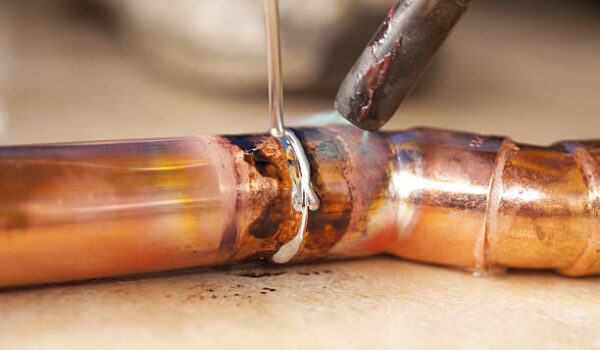
What is MLCP pipe, and is copper really better? Many homeowners, specifiers and installers are asking this as multilayer plastic systems become more common alongside traditional copper. This guide explains what MLCP is, how it compares with copper in plumbing and heating, and why copper still offers clear benefits in safety, reliability and sustainability for modern pipework.
What is MLCP pipe?
MLCP stands for multilayer composite pipe. It is a type of composite pipe made from several bonded layers, usually an inner and outer plastic layer with a thin aluminium layer in the middle. The plastics are often PEX or PE RT, so MLCP is sometimes described as PEX-AL-PEX or multilayer pipe in product literature. The aluminium core gives the pipe form stability, helping it hold its shape once bent, while the plastic layers provide flexibility and corrosion resistance, and protect the metal core from contact with water.
How MLCP is used in plumbing and heating
In typical domestic projects, MLCP is used for central heating pipework, manifold-based systems and sometimes for general plumbing where the manufacturer’s fitting system is adopted throughout. Installers press or crimp fittings onto the pipe, creating mechanical joints that do not require a naked flame. This appeals on busy sites and in retrofit work where hot works permits or fire watch procedures might otherwise be needed.
While MLCP can be used for many of the same applications as copper, it is still a plastic-based solution. That means it behaves very differently in fire, under mechanical stress and over very long lifespans compared with traditional copper systems, which is where the comparison becomes important.
Fire safety and material performance
From a fire safety perspective, the distinction between copper and plastic-based products is significant. Copper pipes are non-combustible and will not contribute fuel to a fire. They do not produce toxic smoke and retain their form at very high temperatures. This supports compartmentation and helps build systems that remain predictable under fire conditions. For an overview of how metals like copper perform as fire-resistant materials, check out our pages on fire safety.
MLCP, by contrast, contains plastic layers that will soften, melt or burn when exposed to high temperatures. Even with an aluminium core, a multilayer pipe cannot match the inherent fire resistance of copper. When plastic components are exposed to fire, they can add to the smoke and toxic gases in a building, which is a key concern for life safety and for protecting escape routes. You can find further analysis on our plastic under fire page.
For projects where fire safety, non-combustibility and smoke behaviour are priority design criteria, copper remains the more robust choice for pipework. It is often preferred in risers, escape routes, high-risk areas and buildings with demanding fire strategies.
Durability, water quality and system reliability
Durability is another area where copper pipes have a long track record. Copper has been used for decades in building services and is known to deliver lifespans that can match or exceed the building itself when correctly installed. It is resistant to ultraviolet light, does not become brittle with age and is less vulnerable to accidental damage once in place. Copper’s natural antimicrobial properties also support good water quality, helping to inhibit the growth of certain bacteria on internal surfaces. Over time, this can contribute to a more hygienic pipework environment compared with purely plastic systems.
MLCP systems, like other plastic pipes, rely on the stability of their polymer layers and the integrity of adhesives bonding plastic to aluminium. While reputable products are tested and certified for long service, they have not yet built the century-long track record associated with copper. Some systems may also depend on specific fittings and tools from a single manufacturer, which can raise compatibility and availability questions in future maintenance or extension work.
For a detailed side-by-side discussion, our article on MLCP pipes vs copper explains where multilayer pipe can work well and where copper’s mechanical strength and proven reliability still make it the better option.
Sustainability and end of life
From a sustainability and circular economy standpoint, copper has a strong advantage. Copper pipe is fully recyclable without loss of quality. Offcuts, recovered pipework from refurbishments, and scrap from end-of-life buildings all retain a high material value and can be returned to the metals supply chain. This reduces waste, limits demand for virgin raw material and supports responsible resource use.
MLCP, on the other hand, is a composite of plastics and metal bonded together. Separating those layers at the end of life is technically challenging and often not economically viable at scale, which means multilayer pipe systems are much more likely to end up as mixed waste or low-grade recyclate. That reduces their alignment with circular design principles compared with single-material metal pipe systems.
As regulations and client expectations tighten around embodied carbon, waste and whole life performance, the recyclability and recoverable value of copper can make it the preferred option for environmentally conscious projects.
So, is copper really better than MLCP?
When fire safety, long-term durability, water quality and end-of-life recyclability are considered together, copper pipes remain the stronger all-around choice. Copper is non-combustible, naturally antimicrobial, mechanically robust and fully recyclable at the end of its service life. It works across almost every building type and risk profile, from new build housing to complex commercial and public buildings.
For anyone designing or refurbishing pipework systems who is comparing multilayer pipe with copper, it is worth looking beyond initial labour savings and considering the whole life performance and safety of the materials involved. Our pages on fire safety, MLCP pipes vs copper and plastic under fire, provide further detail to support an informed choice that balances practicality with long-term resilience.